
The night sky, a canvas of endless wonder, occasionally graces us with a fleeting spectacle: a streak of light cutting across the darkness, vanishing as quickly as it appeared. These mesmerizing phenomena, commonly known as falling stars, have captivated humanity for millennia, inspiring myths, wishes, and scientific inquiry. While their popular name evokes a sense of cosmic descent, these dazzling trails are not stars at all, but rather much smaller, yet equally fascinating, celestial travelers. This article will delve into the true nature of falling stars, exploring their origins, the physics behind their brilliant display, and how we can best witness these ephemeral cosmic dancers.
Understanding the Cosmic Debris: What are Falling Stars?
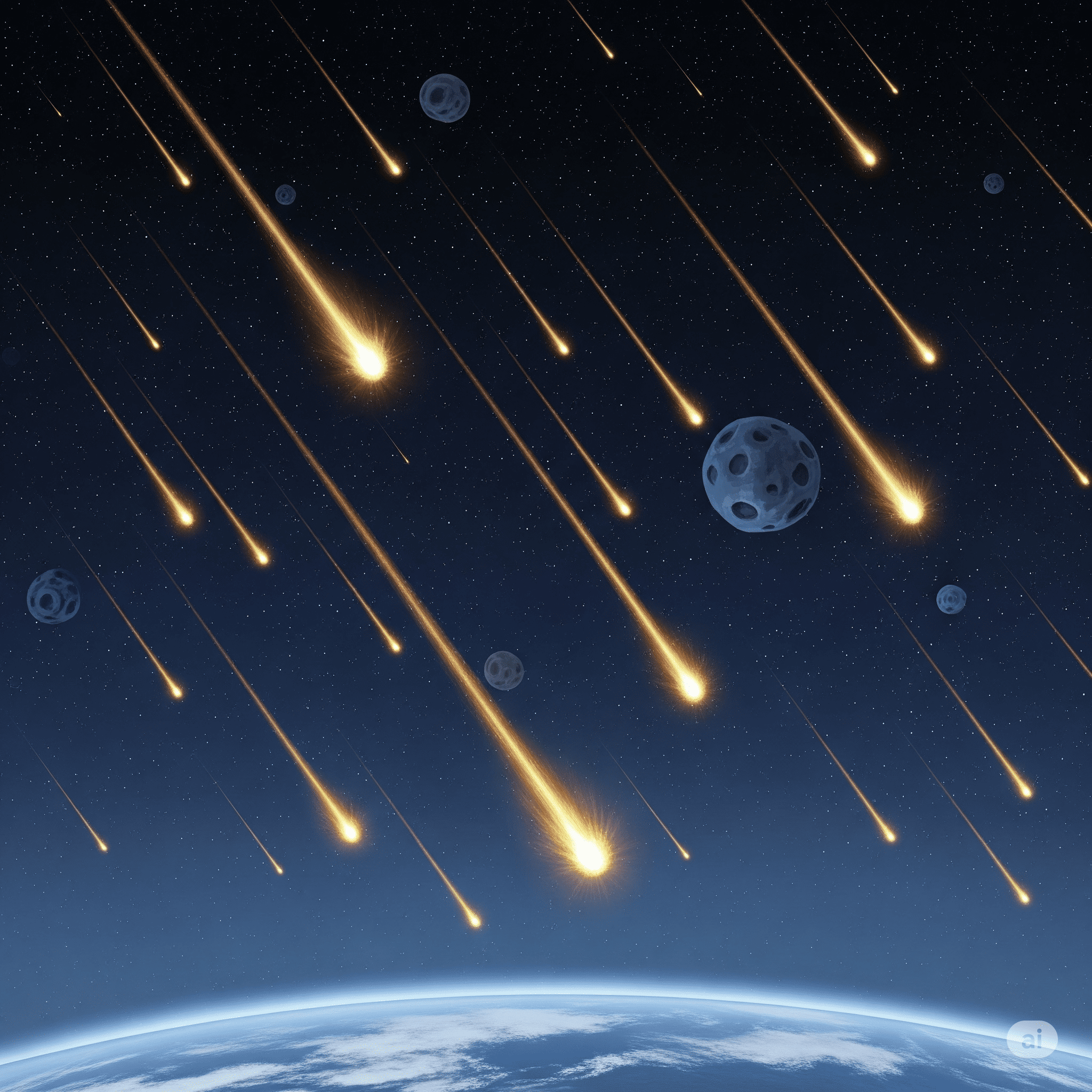
To truly appreciate a falling star, we must first understand its real identity. What we perceive as a “falling star” is actually a meteor. A meteor is the visible streak of light that occurs when a small piece of cosmic debris, known as a meteoroid, enters Earth’s atmosphere and burns up due to friction with the air. These meteoroids can range in size from tiny dust grains, no larger than a grain of sand, to small pebbles or even boulders.
The journey begins far out in space. Meteoroids are essentially rocky or metallic fragments left over from the formation of our solar system, remnants of comets or asteroids. Comets, often described as “dirty snowballs,” shed a trail of dust and ice as they orbit the Sun. Asteroids, larger rocky bodies, can collide and fragment, sending debris hurtling into new trajectories. It is this cosmic detritus that occasionally crosses paths with Earth.
When a meteoroid plunges into our planet’s protective atmospheric blanket, it does so at incredibly high speeds—often tens of thousands of kilometers per hour. This immense velocity creates intense compression of the air in front of the meteoroid, causing it to heat up rapidly, sometimes reaching temperatures exceeding thousands of degrees Celsius. It’s not necessarily the meteoroid itself burning, but rather the atmospheric gases around it that become superheated and glow, creating the luminous trail we observe. This process typically occurs in the upper atmosphere, usually at altitudes between 80 and 120 kilometers (50 to 75 miles) above Earth’s surface.
The Anatomy of a Meteor Shower: A Grand Celestial Display
While individual meteors can appear randomly throughout the year, some of the most breathtaking displays occur during meteor showers. A meteor shower happens when Earth passes through a stream of debris left behind by a comet. As our planet orbits the Sun, it regularly encounters these dusty trails. Each year, at roughly the same time, certain meteor showers can be predicted, offering spectacular opportunities for stargazers.
The naming convention for meteor showers is quite intuitive: they are typically named after the constellation from which their meteors appear to radiate. For example, the Perseids meteor shower, one of the most popular and reliable annual showers, appears to originate from the constellation Perseus. Similarly, the Leonids emanate from Leo, and the Geminids from Gemini. It’s important to remember that the meteors aren’t actually coming from these distant constellations; rather, it’s a perspective effect caused by Earth’s motion through the meteoroid stream. All the meteoroids in a particular stream are traveling on parallel paths, so when they hit Earth’s atmosphere, they appear to diverge from a single point in the sky, much like parallel train tracks seem to converge in the distance.
The intensity of a meteor shower can vary significantly. Some showers, like the Perseids or Geminids, can produce dozens or even hundreds of meteors per hour under ideal viewing conditions, often referred to as the Zenithal Hourly Rate (ZHR). Other, less active showers might only produce a handful of meteors per hour. The intensity depends on the density of the dust stream Earth is passing through and whether we pass close to the “core” of the stream. Occasionally, if Earth passes through a particularly dense part of a cometary debris trail, a meteor storm can occur, with thousands of meteors visible per hour—a truly unforgettable event for any observer.
From Meteor to Meteorite: When a “Star” Survives the Fall
Most meteoroids that enter Earth’s atmosphere are small enough to completely vaporize before reaching the ground. However, if a meteoroid is large enough to survive its fiery descent and impact Earth’s surface, it is then called a meteorite. Meteorites are incredibly valuable to scientists, providing direct samples of extraterrestrial material. Studying meteorites can offer crucial insights into the early solar system, the composition of asteroids and comets, and even the potential for life beyond Earth.
Meteorites can be broadly classified into three main types:
- Stony meteorites: Composed primarily of silicate minerals, similar to rocks on Earth. They are the most common type.
- Iron meteorites: Made mostly of iron and nickel alloys. These are very dense and often have distinctive etch patterns if cut and polished.
- Stony-iron meteorites: A rare mixture of both metallic and rocky material, often appearing as beautiful crystalline structures.
Finding a meteorite is a rare occurrence, but when found, they offer a tangible connection to the vastness of space, a piece of cosmic history right in our hands. Scientists analyze their chemical composition, isotopic ratios, and crystalline structures to unravel the mysteries of our solar system’s origins.
Tips for Observing Falling Stars: Your Guide to a Cosmic Spectacle
Witnessing a meteor shower can be an awe-inspiring experience, but it requires a bit of planning and patience. Here are some tips to maximize your chances of catching these celestial displays:
- Check Meteor Shower Calendars: Astronomers and astronomy websites regularly publish calendars detailing upcoming meteor showers, including their peak dates and predicted ZHR. This is your first step to knowing when and where to look.
- Find a Dark Sky Location: Light pollution from cities is the biggest enemy of meteor viewing. Head away from urban areas to a rural location with minimal artificial light. The darker the sky, the more meteors you’ll be able to see, including fainter ones.
- Allow Your Eyes to Adapt: It takes about 20-30 minutes for your eyes to fully adjust to the dark. Avoid looking at bright lights, including phone screens, during this period. If you must use a light, use a red-light flashlight, as red light is less disruptive to night vision.
- Look Towards the Radiant (but not directly): While meteor showers are named after their radiant constellation, you don’t need to stare directly at it. Meteors often appear brightest and leave longer trails when they are observed a bit away from the radiant. Look for a wide-open view of the sky.
- Be Patient and Comfortable: Meteor watching is a waiting game. Bring a comfortable reclining chair or a blanket to lie on. Dress warmly, even on what seems like a mild night, as temperatures can drop significantly after sunset. Hot drinks and snacks can also enhance the experience.
- No Equipment Needed: The beauty of meteor showers is that you don’t need telescopes or binoculars. Your naked eye is the best tool for observing these widespread phenomena. Binoculars or telescopes limit your field of view too much.
- Watch After Midnight: The best time to observe most meteor showers is after midnight, local time, when the radiant is higher in the sky and Earth is turning into the meteoroid stream, much like bugs hitting the front windshield of a moving car.
3,593 comments
Il game show Crazy Time è sicuramente il game show più giocati nei casinò online. Prodotto da Evolution, viene trasmesso in diretta ormai da diversi anni e unisce una grande ruota colorata con quattro round bonus: Pachinko, Cash Hunt, Coin Flip e il bonus Crazy Time.
La meccanica è semplice: il conduttore fa girare la ruota, chi gioca scommette su uno dei quattro numeri e sui round bonus. Prima di ogni giro la doppia bobina Top Slot moltiplica la puntata fino a 50x. L’RTP teorico oscilla fra 94% e 96% in base al segmento.
Dall’Italia si può giocare esclusivamente su casinò con licenza ADM, incluso un tavolo dedicato in italiano. Le puntate sono compresi tra 0,10 e 1.000 euro per la versione Italia.
Per saperne di più sul funzionamento del gioco per chi gioca dall’Italia, rimandiamo a crazy time statistiche dove trovate dati reali sulle uscite, guide su probabilità e frequenze e risorse per il gioco responsabile.
https://curadelsolrx.com/# order from mexican pharmacy online
Il game show Crazy Time è sicuramente il giochi live più seguiti tra i giocatori italiani. Sviluppato dallo studio Evolution, viene trasmesso in diretta dal 2020 mescolando una grande ruota colorata e quattro bonus round speciali: Cash Hunt, Coin Flip, Pachinko e il round finale Crazy Time.
La meccanica è semplice: il conduttore fa girare la ruota, chi gioca scommette su uno dei quattro numeri e sui round bonus. A ogni spin il Top Slot può moltiplicare i premi fino a 50 volte. Il ritorno al giocatore teorico varia tra il 94,33% e il 96,08% a seconda dell’esito scelto.
In Italia Crazy Time è disponibile solo tramite operatori ADM, con un tavolo in lingua italiana. Le puntate sono compresi tra 0,10 e 1.000 euro al tavolo italiano.
Per una guida completa su regole, statistiche e bonus per il mercato italiano, consigliamo gioco crazy time dove trovate analisi dettagliate, approfondimenti su RTP e vincita massima e risorse per il gioco responsabile.
Crazy Time resta il giochi live più seguiti nei casinò online. Creato da Evolution Gaming, viene trasmesso in diretta da giugno 2020 mescolando la ruota a 54 segmenti a quattro giochi bonus: Coin Flip, Pachinko, Cash Hunt e il Crazy Time round.
Il funzionamento è intuitivo: l’host gira la ruota in diretta, chi gioca scommette sui numeri 1, 2, 5 o 10 oppure sui bonus. A ogni spin la doppia bobina Top Slot moltiplica la puntata fino a 50x. L’RTP teorico varia tra il 94,33% e il 96,08% a seconda della puntata.
Dall’Italia Crazy Time è disponibile esclusivamente su casinò con licenza ADM, e dal 2024 esiste un tavolo italiano dedicato. Le puntate partono da 10 centesimi fino a 1.000 euro al tavolo italiano.
Per approfondire su regole, statistiche e bonus per chi gioca dall’Italia, rimandiamo a crazy time spicchi dove trovate dati reali sulle uscite, spiegazioni su RTP e probabilità e informazioni sul gioco responsabile.
Crazy Time è uno dei game show più giocati nel mondo del casinò live. Prodotto da Evolution, va in onda da giugno 2020 combinando una ruota da 54 spicchi e quattro bonus round speciali: Cash Hunt, Coin Flip, Pachinko e il round finale Crazy Time.
La meccanica è semplice: l’host gira la ruota in diretta, si punta su uno dei quattro numeri e sui round bonus. A ogni spin la doppia bobina Top Slot moltiplica la puntata fino a 50x. Il ritorno al giocatore teorico si colloca intorno al 95% a seconda della puntata.
In Italia si può giocare solo tramite operatori ADM, incluso un tavolo dedicato in italiano. I limiti di puntata vanno da 0,10 € a 1.000 € al tavolo italiano.
Per una guida completa su come funziona Crazy Time per chi gioca dall’Italia, rimandiamo a statistiche crazy time con statistiche aggiornate, spiegazioni su RTP e probabilità e informazioni sul gioco responsabile.
best online pharmacy no prescription: world pharmacy india – order medicines from india to usa
Crazy Time di Evolution resta il game show più giocati nei casinò online. Prodotto da Evolution, viene trasmesso in diretta ormai da diversi anni e unisce una ruota da 54 spicchi con quattro round bonus: Coin Flip, Pachinko, Cash Hunt e il Crazy Time round.
Il funzionamento è intuitivo: l’host gira la ruota in diretta, i giocatori puntano sui numeri 1, 2, 5 o 10 e sui round bonus. Ad ogni giro il Top Slot può moltiplicare la puntata fino a 50x. L’RTP teorico si colloca intorno al 95% a seconda della puntata.
In Italia è possibile giocare solo tramite operatori ADM, incluso un tavolo dedicato in italiano. I limiti partono da 10 centesimi fino a 1.000 euro al tavolo italiano.
Per una guida completa su regole, statistiche e bonus per il mercato italiano, rimandiamo a crazy time coin flip dove trovate statistiche aggiornate, approfondimenti su RTP e vincita massima oltre a consigli sul gioco consapevole.
Crazy Time di Evolution resta il game show più giocati nei casinò online. Sviluppato dallo studio Evolution, viene trasmesso in diretta ormai da diversi anni combinando una grande ruota colorata a quattro giochi bonus: Coin Flip, Pachinko, Cash Hunt e il Crazy Time round.
Le regole sono accessibili: il conduttore fa girare la ruota, chi gioca scommette sui numeri 1, 2, 5 o 10 e sui round bonus. Ad ogni giro il meccanismo Top Slot può aggiungere un moltiplicatore i premi fino a 50 volte. L’RTP teorico oscilla fra 94% e 96% a seconda della puntata.
Per i giocatori italiani è possibile giocare esclusivamente su casinò con licenza ADM, e dal 2024 esiste un tavolo italiano dedicato. I limiti vanno da 0,10 € a 1.000 € sui tavoli italiani.
Per saperne di più su regole, statistiche e bonus per il mercato italiano, rimandiamo a game show crazy time dove trovate analisi dettagliate, spiegazioni su RTP e probabilità e risorse per il gioco responsabile.
prescription ed pills online! erectionpillsx.com beneficial website.
Il game show Crazy Time è sicuramente il giochi live più seguiti nei casinò online. Creato da Evolution Gaming, il gioco è in onda ormai da diversi anni e unisce la ruota a 54 segmenti a quattro giochi bonus: Cash Hunt, Coin Flip, Pachinko e il round finale Crazy Time.
La meccanica è semplice: un presentatore gira la ruota, si punta su numeri e bonus oppure sui bonus. Ad ogni giro il meccanismo Top Slot può aggiungere un moltiplicatore la puntata fino a 50x. Il ritorno al giocatore teorico varia tra il 94,33% e il 96,08% a seconda della puntata.
Dall’Italia Crazy Time è disponibile solo su piattaforme autorizzate ADM, con un tavolo in lingua italiana. I limiti sono compresi tra 0,10 e 1.000 euro al tavolo italiano.
Per saperne di più su regole, statistiche e bonus per il mercato italiano, consigliamo crazy time live casino con statistiche aggiornate, guide su probabilità e frequenze e risorse per il gioco responsabile.