The night sky, a canvas of endless wonder, occasionally graces us with a fleeting spectacle: a streak of light cutting across the darkness, vanishing as quickly as it appeared. These mesmerizing phenomena, commonly known as falling stars, have captivated humanity for millennia, inspiring myths, wishes, and scientific inquiry. While their popular name evokes a sense of cosmic descent, these dazzling trails are not stars at all, but rather much smaller, yet equally fascinating, celestial travelers. This article will delve into the true nature of falling stars, exploring their origins, the physics behind their brilliant display, and how we can best witness these ephemeral cosmic dancers.
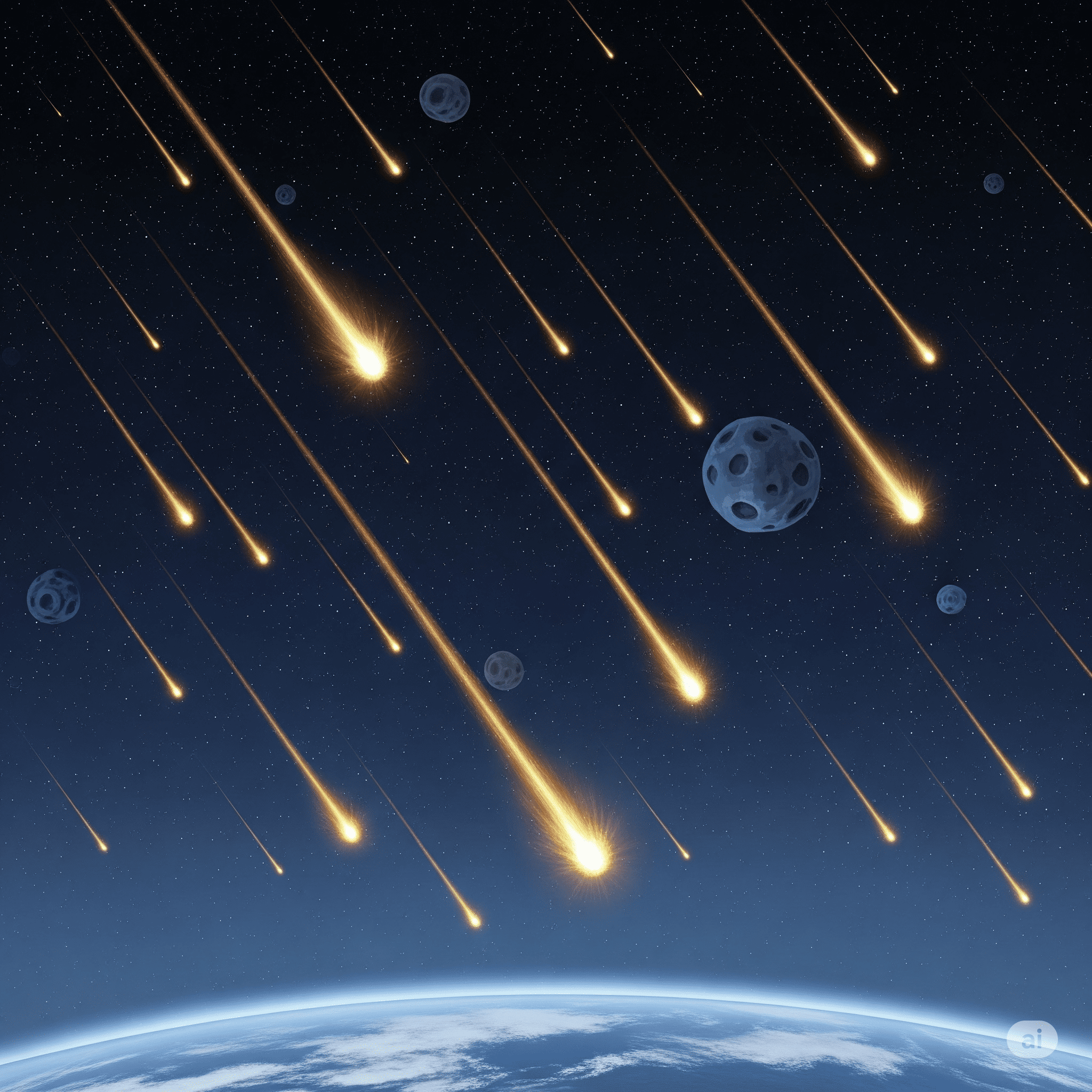
Understanding the Cosmic Debris: What are Falling Stars?
To truly appreciate a falling star, we must first understand its real identity. What we perceive as a “falling star” is actually a meteor. A meteor is the visible streak of light that occurs when a small piece of cosmic debris, known as a meteoroid, enters Earth’s atmosphere and burns up due to friction with the air. These meteoroids can range in size from tiny dust grains, no larger than a grain of sand, to small pebbles or even boulders.
The journey begins far out in space. Meteoroids are essentially rocky or metallic fragments left over from the formation of our solar system, remnants of comets or asteroids. Comets, often described as “dirty snowballs,” shed a trail of dust and ice as they orbit the Sun. Asteroids, larger rocky bodies, can collide and fragment, sending debris hurtling into new trajectories. It is this cosmic detritus that occasionally crosses paths with Earth.
When a meteoroid plunges into our planet’s protective atmospheric blanket, it does so at incredibly high speeds—often tens of thousands of kilometers per hour. This immense velocity creates intense compression of the air in front of the meteoroid, causing it to heat up rapidly, sometimes reaching temperatures exceeding thousands of degrees Celsius. It’s not necessarily the meteoroid itself burning, but rather the atmospheric gases around it that become superheated and glow, creating the luminous trail we observe. This process typically occurs in the upper atmosphere, usually at altitudes between 80 and 120 kilometers (50 to 75 miles) above Earth’s surface.
The Anatomy of a Meteor Shower: A Grand Celestial Display
While individual meteors can appear randomly throughout the year, some of the most breathtaking displays occur during meteor showers. A meteor shower happens when Earth passes through a stream of debris left behind by a comet. As our planet orbits the Sun, it regularly encounters these dusty trails. Each year, at roughly the same time, certain meteor showers can be predicted, offering spectacular opportunities for stargazers.
The naming convention for meteor showers is quite intuitive: they are typically named after the constellation from which their meteors appear to radiate. For example, the Perseids meteor shower, one of the most popular and reliable annual showers, appears to originate from the constellation Perseus. Similarly, the Leonids emanate from Leo, and the Geminids from Gemini. It’s important to remember that the meteors aren’t actually coming from these distant constellations; rather, it’s a perspective effect caused by Earth’s motion through the meteoroid stream. All the meteoroids in a particular stream are traveling on parallel paths, so when they hit Earth’s atmosphere, they appear to diverge from a single point in the sky, much like parallel train tracks seem to converge in the distance.
The intensity of a meteor shower can vary significantly. Some showers, like the Perseids or Geminids, can produce dozens or even hundreds of meteors per hour under ideal viewing conditions, often referred to as the Zenithal Hourly Rate (ZHR). Other, less active showers might only produce a handful of meteors per hour. The intensity depends on the density of the dust stream Earth is passing through and whether we pass close to the “core” of the stream. Occasionally, if Earth passes through a particularly dense part of a cometary debris trail, a meteor storm can occur, with thousands of meteors visible per hour—a truly unforgettable event for any observer.
From Meteor to Meteorite: When a “Star” Survives the Fall
Most meteoroids that enter Earth’s atmosphere are small enough to completely vaporize before reaching the ground. However, if a meteoroid is large enough to survive its fiery descent and impact Earth’s surface, it is then called a meteorite. Meteorites are incredibly valuable to scientists, providing direct samples of extraterrestrial material. Studying meteorites can offer crucial insights into the early solar system, the composition of asteroids and comets, and even the potential for life beyond Earth.
Meteorites can be broadly classified into three main types:
- Stony meteorites: Composed primarily of silicate minerals, similar to rocks on Earth. They are the most common type.
- Iron meteorites: Made mostly of iron and nickel alloys. These are very dense and often have distinctive etch patterns if cut and polished.
- Stony-iron meteorites: A rare mixture of both metallic and rocky material, often appearing as beautiful crystalline structures.
Finding a meteorite is a rare occurrence, but when found, they offer a tangible connection to the vastness of space, a piece of cosmic history right in our hands. Scientists analyze their chemical composition, isotopic ratios, and crystalline structures to unravel the mysteries of our solar system’s origins.
Tips for Observing Falling Stars: Your Guide to a Cosmic Spectacle
Witnessing a meteor shower can be an awe-inspiring experience, but it requires a bit of planning and patience. Here are some tips to maximize your chances of catching these celestial displays:
- Check Meteor Shower Calendars: Astronomers and astronomy websites regularly publish calendars detailing upcoming meteor showers, including their peak dates and predicted ZHR. This is your first step to knowing when and where to look.
- Find a Dark Sky Location: Light pollution from cities is the biggest enemy of meteor viewing. Head away from urban areas to a rural location with minimal artificial light. The darker the sky, the more meteors you’ll be able to see, including fainter ones.
- Allow Your Eyes to Adapt: It takes about 20-30 minutes for your eyes to fully adjust to the dark. Avoid looking at bright lights, including phone screens, during this period. If you must use a light, use a red-light flashlight, as red light is less disruptive to night vision.
- Look Towards the Radiant (but not directly): While meteor showers are named after their radiant constellation, you don’t need to stare directly at it. Meteors often appear brightest and leave longer trails when they are observed a bit away from the radiant. Look for a wide-open view of the sky.
- Be Patient and Comfortable: Meteor watching is a waiting game. Bring a comfortable reclining chair or a blanket to lie on. Dress warmly, even on what seems like a mild night, as temperatures can drop significantly after sunset. Hot drinks and snacks can also enhance the experience.
- No Equipment Needed: The beauty of meteor showers is that you don’t need telescopes or binoculars. Your naked eye is the best tool for observing these widespread phenomena. Binoculars or telescopes limit your field of view too much.
- Watch After Midnight: The best time to observe most meteor showers is after midnight, local time, when the radiant is higher in the sky and Earth is turning into the meteoroid stream, much like bugs hitting the front windshield of a moving car.
32,726 comments
Kod promocyjny często podnosi wartość bonusu i liczbę darmowych obrotów.
Po dokonaniu pierwszej wpłaty bonus powiązany z kodem trafia na konto gracza.
Bonus może dotyczyć wyłącznie wybranych gier lub kategorii automatów.
Vox Casino informuje o świeżych ofertach na stronie bonusów i w wiadomościach.
Oferta z kodem działa również w aplikacji mobilnej na Androida i iOS.
kod promocyjny do vox casino kod promocyjny do vox casino
http://cyclecareclomid.com/# CycleCareClomid
https://clinicalpathiver.shop/# stromectol 3 mg tablet
true fortune casino true fortune casino
The casino focuses on ease of use, offering quick access to games and cashier from one account.
Fans of classic games will find several variants of blackjack and roulette.
Regular players can benefit from reload bonuses, cashback and tournaments.
The casino processes payouts once account verification has been completed.
A responsive design ensures smooth performance across devices.
ClinicalPathIver: ivermectin generic – stromectol cvs
To jedna z najpopularniejszych promocji, ponieważ pozwala poznać sloty bez własnego wkładu.
Free spiny są dostępne po utworzeniu konta i zalogowaniu się do serwisu.
Spiny działają zwykle na wybranych automatach wskazanych przez Mostbet.
Cykliczne doładowania konta również mogą nagradzać gracza dodatkowymi spinami.
Z darmowych spinów można korzystać zarówno na komputerze, jak i w aplikacji mobilnej Mostbet.
mostbet 100 free spins mostbet 100 free spins
Kod promocyjny często podnosi wartość bonusu i liczbę darmowych obrotów.
Wpisanie kodu w wyznaczonym polu aktywuje przypisaną do niego ofertę.
Warunki mogą ograniczać maksymalną wysokość zakładu podczas obrotu bonusem.
Stali użytkownicy mogą otrzymywać kody na reload bonusy i darmowe spiny.
Zaleca się ustalanie limitów i rozsądne korzystanie z bonusów.
vox casino darmowe kody bez depozytu 2026 vox casino darmowe kody bez depozytu 2026
Darmowe spiny w Mostbet to obroty na automatach, które gracz otrzymuje bez konieczności wykorzystywania własnych środków.
Zestaw darmowych spinów bywa rozłożony na kilka dni, aby wydłużyć rozgrywkę.
Każdy zestaw spinów obowiązuje przez ograniczony czas wskazany w warunkach promocji.
Aktywni użytkownicy z Polski otrzymują spiny za kolejne depozyty i udział w promocjach.
Zaleca się grę odpowiedzialną oraz ustalanie własnych limitów wydatków.
mostbet 100 free spins bez depozytu mostbet 100 free spins bez depozytu
buy ivermectin canada: ivermectin uk coronavirus – ClinicalPathIver
888starz 888starz
بترخيص دولي معتمد، يوفر الموقع بيئة آمنة وشفافة لكل معاملة.
يضم القسم آلاف عناوين السلوت من استوديوهات موثوقة.
يتيح القسم الرياضي الرهان على أكثر من 35 نوعًا من كرة القدم إلى UFC والإي سبورتس.
ولا تقتصر العروض على الترحيب بل تشمل كاش باك ورهانات مجانية وبطولات.
يعمل فريق المساعدة طوال اليوم مع تطبيق محمول لأندرويد وآبل.