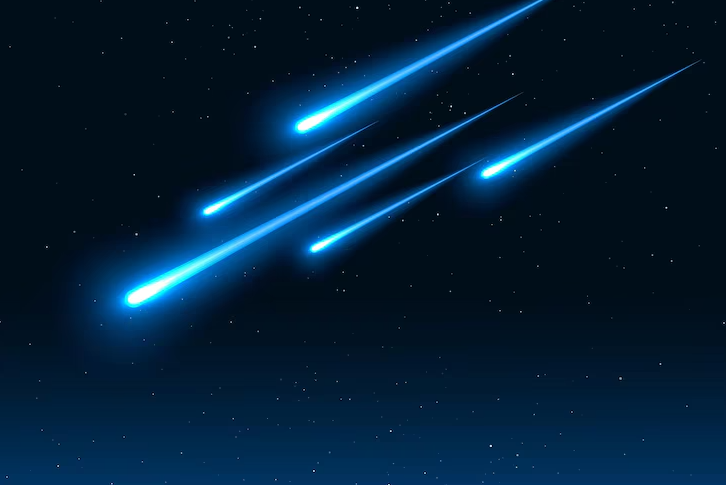
The night sky, a canvas of endless wonder, occasionally graces us with a fleeting spectacle: a streak of light cutting across the darkness, vanishing as quickly as it appeared. These mesmerizing phenomena, commonly known as falling stars, have captivated humanity for millennia, inspiring myths, wishes, and scientific inquiry. While their popular name evokes a sense of cosmic descent, these dazzling trails are not stars at all, but rather much smaller, yet equally fascinating, celestial travelers. This article will delve into the true nature of falling stars, exploring their origins, the physics behind their brilliant display, and how we can best witness these ephemeral cosmic dancers.
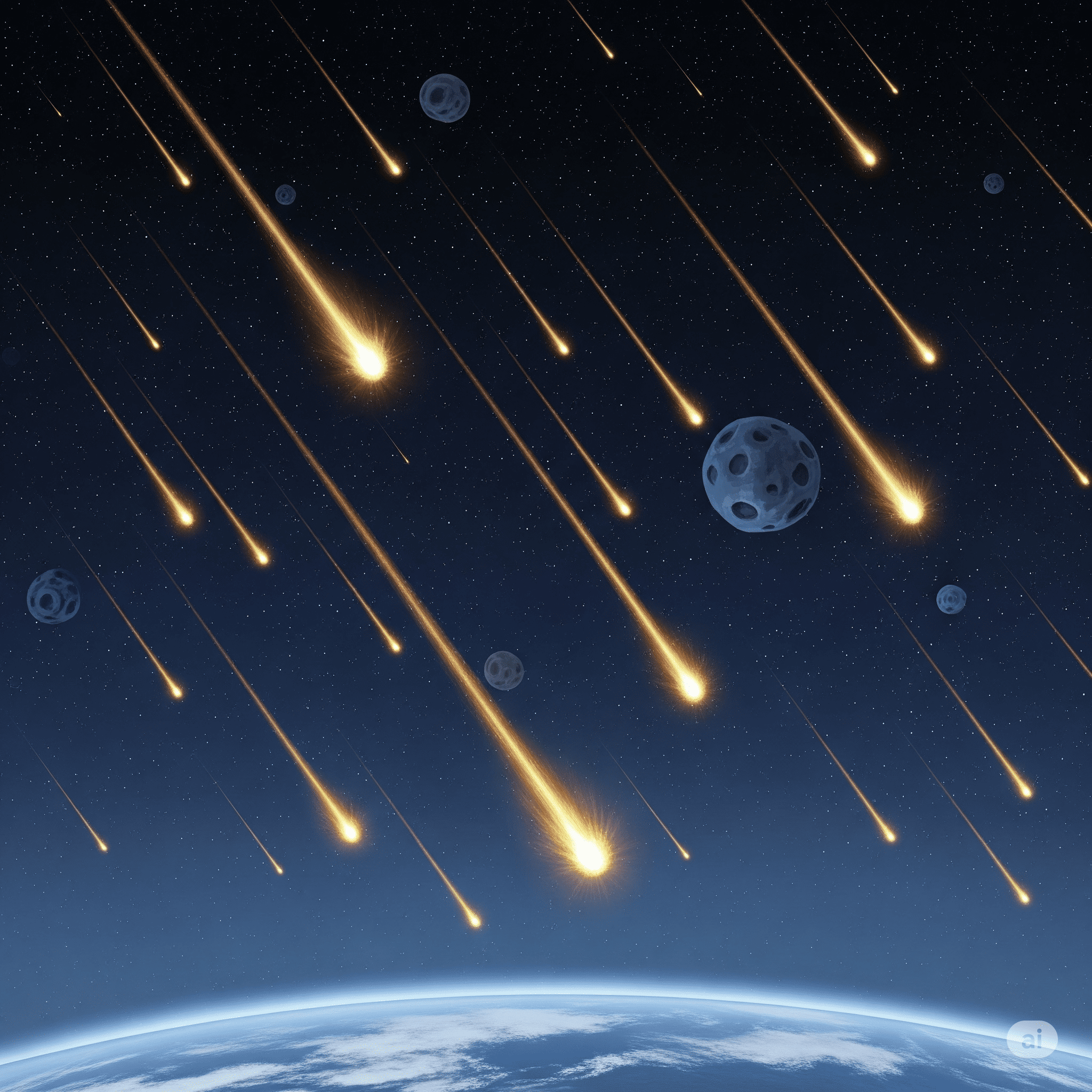
Understanding the Cosmic Debris: What are Falling Stars?
To truly appreciate a falling star, we must first understand its real identity. What we perceive as a “falling star” is actually a meteor. A meteor is the visible streak of light that occurs when a small piece of cosmic debris, known as a meteoroid, enters Earth’s atmosphere and burns up due to friction with the air. These meteoroids can range in size from tiny dust grains, no larger than a grain of sand, to small pebbles or even boulders.
The journey begins far out in space. Meteoroids are essentially rocky or metallic fragments left over from the formation of our solar system, remnants of comets or asteroids. Comets, often described as “dirty snowballs,” shed a trail of dust and ice as they orbit the Sun. Asteroids, larger rocky bodies, can collide and fragment, sending debris hurtling into new trajectories. It is this cosmic detritus that occasionally crosses paths with Earth.
When a meteoroid plunges into our planet’s protective atmospheric blanket, it does so at incredibly high speeds—often tens of thousands of kilometers per hour. This immense velocity creates intense compression of the air in front of the meteoroid, causing it to heat up rapidly, sometimes reaching temperatures exceeding thousands of degrees Celsius. It’s not necessarily the meteoroid itself burning, but rather the atmospheric gases around it that become superheated and glow, creating the luminous trail we observe. This process typically occurs in the upper atmosphere, usually at altitudes between 80 and 120 kilometers (50 to 75 miles) above Earth’s surface.
The Anatomy of a Meteor Shower: A Grand Celestial Display
While individual meteors can appear randomly throughout the year, some of the most breathtaking displays occur during meteor showers. A meteor shower happens when Earth passes through a stream of debris left behind by a comet. As our planet orbits the Sun, it regularly encounters these dusty trails. Each year, at roughly the same time, certain meteor showers can be predicted, offering spectacular opportunities for stargazers.
The naming convention for meteor showers is quite intuitive: they are typically named after the constellation from which their meteors appear to radiate. For example, the Perseids meteor shower, one of the most popular and reliable annual showers, appears to originate from the constellation Perseus. Similarly, the Leonids emanate from Leo, and the Geminids from Gemini. It’s important to remember that the meteors aren’t actually coming from these distant constellations; rather, it’s a perspective effect caused by Earth’s motion through the meteoroid stream. All the meteoroids in a particular stream are traveling on parallel paths, so when they hit Earth’s atmosphere, they appear to diverge from a single point in the sky, much like parallel train tracks seem to converge in the distance.
The intensity of a meteor shower can vary significantly. Some showers, like the Perseids or Geminids, can produce dozens or even hundreds of meteors per hour under ideal viewing conditions, often referred to as the Zenithal Hourly Rate (ZHR). Other, less active showers might only produce a handful of meteors per hour. The intensity depends on the density of the dust stream Earth is passing through and whether we pass close to the “core” of the stream. Occasionally, if Earth passes through a particularly dense part of a cometary debris trail, a meteor storm can occur, with thousands of meteors visible per hour—a truly unforgettable event for any observer.
From Meteor to Meteorite: When a “Star” Survives the Fall
Most meteoroids that enter Earth’s atmosphere are small enough to completely vaporize before reaching the ground. However, if a meteoroid is large enough to survive its fiery descent and impact Earth’s surface, it is then called a meteorite. Meteorites are incredibly valuable to scientists, providing direct samples of extraterrestrial material. Studying meteorites can offer crucial insights into the early solar system, the composition of asteroids and comets, and even the potential for life beyond Earth.
Meteorites can be broadly classified into three main types:
- Stony meteorites: Composed primarily of silicate minerals, similar to rocks on Earth. They are the most common type.
- Iron meteorites: Made mostly of iron and nickel alloys. These are very dense and often have distinctive etch patterns if cut and polished.
- Stony-iron meteorites: A rare mixture of both metallic and rocky material, often appearing as beautiful crystalline structures.
Finding a meteorite is a rare occurrence, but when found, they offer a tangible connection to the vastness of space, a piece of cosmic history right in our hands. Scientists analyze their chemical composition, isotopic ratios, and crystalline structures to unravel the mysteries of our solar system’s origins.
Tips for Observing Falling Stars: Your Guide to a Cosmic Spectacle
Witnessing a meteor shower can be an awe-inspiring experience, but it requires a bit of planning and patience. Here are some tips to maximize your chances of catching these celestial displays:
- Check Meteor Shower Calendars: Astronomers and astronomy websites regularly publish calendars detailing upcoming meteor showers, including their peak dates and predicted ZHR. This is your first step to knowing when and where to look.
- Find a Dark Sky Location: Light pollution from cities is the biggest enemy of meteor viewing. Head away from urban areas to a rural location with minimal artificial light. The darker the sky, the more meteors you’ll be able to see, including fainter ones.
- Allow Your Eyes to Adapt: It takes about 20-30 minutes for your eyes to fully adjust to the dark. Avoid looking at bright lights, including phone screens, during this period. If you must use a light, use a red-light flashlight, as red light is less disruptive to night vision.
- Look Towards the Radiant (but not directly): While meteor showers are named after their radiant constellation, you don’t need to stare directly at it. Meteors often appear brightest and leave longer trails when they are observed a bit away from the radiant. Look for a wide-open view of the sky.
- Be Patient and Comfortable: Meteor watching is a waiting game. Bring a comfortable reclining chair or a blanket to lie on. Dress warmly, even on what seems like a mild night, as temperatures can drop significantly after sunset. Hot drinks and snacks can also enhance the experience.
- No Equipment Needed: The beauty of meteor showers is that you don’t need telescopes or binoculars. Your naked eye is the best tool for observing these widespread phenomena. Binoculars or telescopes limit your field of view too much.
- Watch After Midnight: The best time to observe most meteor showers is after midnight, local time, when the radiant is higher in the sky and Earth is turning into the meteoroid stream, much like bugs hitting the front windshield of a moving car.
3,823 comments
https://borealvigorcanada.com/# online erectile dysfunction pills
cheapest online pharmacy india: vedalytic pharma – india online pharmacy
http://mexivexpharma.com/# online drugs order
canadian drugs online: canadian prescription refills – 77 canadian pharmacy
Марка 08Х18Н10 — коррозионно-стойкая хромоникелевая сталь аустенитного класса без титана. По действующему ГОСТ 5632-2014 в её составе до 0,08 % углерода, около 18 % хрома (17–19 %) и от 9 до 11 % никеля, остальное — железо.
Обозначение читается слева направо: число «08» показывает углерод в сотых долях процента, Х18 — около 18 % хрома, «Н10» — примерно 10 % никеля. Буквы Т в названии нет: титаном сталь не легирована. За рубежом ближайшими аналогами считаются американская AISI 304 и европейская 1.4301.
Плотность стали — 7,9 г/см3 (7900 кг/м3). Предел прочности листа по ГОСТ 5582-75 — от 510 МПа, а предел текучести тонкого листа — не ниже 185 МПа. При длительной работе на воздухе её нагревают не выше 800 °C.
Важная особенность: титана в составе нет, так что сварные соединения (кроме точечной сварки) склонны к межкристаллитной коррозии. Для сварных узлов в агрессивной среде как правило, берут стали с титаном или низкоуглеродистую 03Х18Н11.
Зарубежную 304, аналог 08Х18Н10, применяют в пищевом оборудовании, мойках и посуде, перилах и архитектурных панелях, а также в химических ёмкостях. Из этой стали делают лист, трубу, круг, проволоку, полосу и рулон.
Состав, свойства, ГОСТ и виды проката разобраны здесь: сталь 08Х18Н10. Там есть химический состав и механические свойства, калькулятор веса и сравнение с AISI 304 и титановыми марками.
Нержавеющая сталь 08Х18Н10 — аустенитная хромоникелевая нержавеющая сталь без титана. Согласно ГОСТ 5632-2014 в её составе не более 0,08 % углерода, около 18 % хрома (17–19 %) и 9–11 % никеля, основа сплава — железо.
Маркировка расшифровывается просто: «08» — это углерод в сотых долях процента, «Х18» — примерно 18 % хрома, буква Н с числом 10 — около 10 % никеля. Буквы Т в конце нет: титана в стали нет. Ближайшие импортные аналоги — американская AISI 304 и европейская 1.4301.
Плотность стали — 7,9 г/см3. Предел прочности листа по ГОСТ 5582-75 — не ниже 510 МПа, предел текучести тонкого листа — не менее 185 МПа. При длительной работе на воздухе её нагревают не выше 800 °C.
Важная особенность: сталь не стабилизирована титаном, так что сварные соединения (кроме точечной сварки) склонны к межкристаллитной коррозии. Для сварных узлов в агрессивной среде чаще берут стали с титаном или низкоуглеродистую 03Х18Н11.
Аналог этой марки, сталь 304, широко применяют в пищевом оборудовании, кухонных мойках и посуде, архитектурных панелях, перилах, и в химических ёмкостях. Из 08Х18Н10 выпускают трубу, лист, рулон, полосу, круг, шестигранник и проволоку.
Все цифры по марке собраны здесь: сталь 08Х18Н10. В справочнике есть таблицы состава и свойств, калькулятор веса и сравнение с AISI 304 и титановыми марками.
Марка 08Х18Н10 — коррозионно-стойкая хромоникелевая сталь аустенитного класса без добавки титана. Согласно ГОСТ 5632-2014 в её составе не более 0,08 % углерода, около 18 % хрома (17–19 %) и около 10 % никеля (9–11 %), всё остальное — железо.
Расшифровка марки простая: первые цифры «08» означают углерод в сотых долях процента, Х18 — около 18 % хрома, буква Н с числом 10 — около 10 % никеля. Буквы Т в конце нет: титан в состав не входит. Ближайшие зарубежные аналоги — AISI 304 (США) и 1.4301 (Европа).
Плотность материала — 7,9 г/см3 (7900 кг/м3). Предел прочности листа по ГОСТ 5582-75 — не менее 510 МПа, а предел текучести тонкого листа — не ниже 185 МПа. На воздухе сталь длительно работает при нагреве до 800 °C.
Что нужно учитывать: титана в составе нет, и сварные швы, кроме точечной сварки, склонны к межкристаллитной коррозии. Для сварных узлов в агрессивной среде обычно выбирают титановые 08Х18Н10Т и 12Х18Н10Т либо 03Х18Н11.
Сталь 304, ближайший аналог марки, применяют в мойках, посуде и пищевом оборудовании, архитектурных панелях, перилах, и в химических ёмкостях. Из марки 08Х18Н10 производят лист, трубу, круг, проволоку, полосу и рулон.
Состав, свойства, ГОСТ и виды проката разобраны здесь: 8Х18Н10. На сайте есть химический состав и механические свойства, калькулятор веса и сравнение с 08Х18Н10Т, 12Х18Н10Т и AISI 304.
https://mexivexpharma.xyz/# meds from mexico
Марка 08Х18Н10 — аустенитная хромоникелевая нержавеющая сталь без титана. По ГОСТ 5632-2014 в ней не более 0,08 % углерода, 17–19 % хрома и 9–11 % никеля, основа сплава — железо.
Обозначение читается слева направо: первые цифры «08» означают углерод в сотых долях процента, Х18 — около 18 % хрома, Н10 — около 10 % никеля. Буквы Т в конце нет: титан в состав не входит. За рубежом ближайшими аналогами считаются американская AISI 304 и европейская 1.4301.
Плотность материала — 7,9 г/см3. Прочность листового проката по ГОСТ 5582-75 — не менее 510 МПа, предел текучести тонкого листа — не менее 185 МПа. При длительной работе на воздухе её нагревают не выше 800 °C.
Важная особенность: титаном марка не легирована, так что сварные соединения (кроме точечной сварки) склонны к межкристаллитной коррозии. Для сварных узлов в агрессивной среде чаще берут 08Х18Н10Т, 12Х18Н10Т или низкоуглеродистую 03Х18Н11.
Зарубежную 304, аналог 08Х18Н10, применяют в мойках, посуде и пищевом оборудовании, перилах и архитектурных панелях, а ещё в ёмкостях для химических производств. Из 08Х18Н10 выпускают трубу, лист, круг, проволоку, полосу, рулон и уголок.
Подробный справочник по марке — 8Х18Н10. Там есть таблицы состава и свойств, калькулятор веса проката и сравнение с 08Х18Н10Т, 12Х18Н10Т и AISI 304.
ed pharmacist review! discreet shipping beneficial web site, https://erectionpillsx.com/#