The night sky, a canvas of endless wonder, occasionally graces us with a fleeting spectacle: a streak of light cutting across the darkness, vanishing as quickly as it appeared. These mesmerizing phenomena, commonly known as falling stars, have captivated humanity for millennia, inspiring myths, wishes, and scientific inquiry. While their popular name evokes a sense of cosmic descent, these dazzling trails are not stars at all, but rather much smaller, yet equally fascinating, celestial travelers. This article will delve into the true nature of falling stars, exploring their origins, the physics behind their brilliant display, and how we can best witness these ephemeral cosmic dancers.
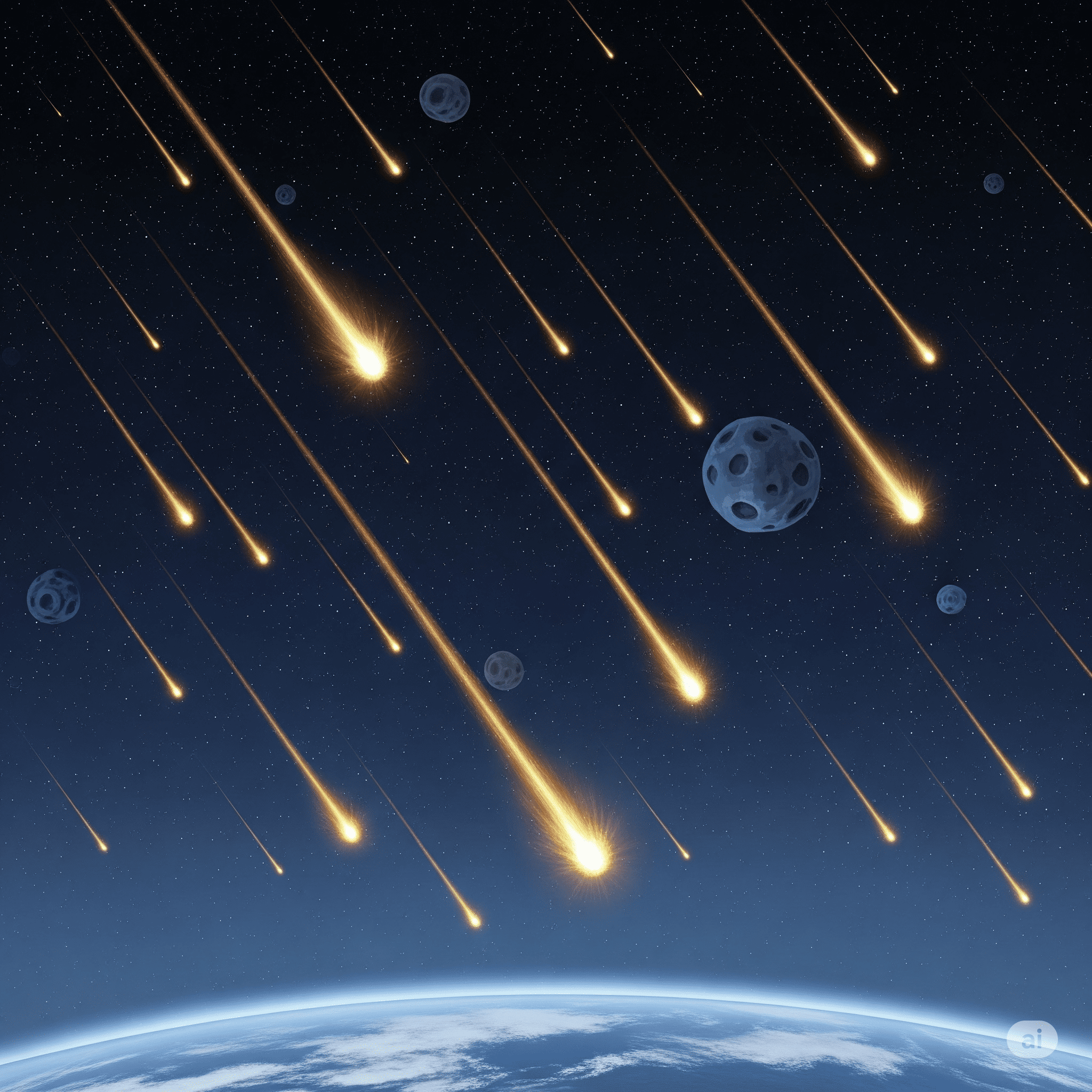
Understanding the Cosmic Debris: What are Falling Stars?
To truly appreciate a falling star, we must first understand its real identity. What we perceive as a “falling star” is actually a meteor. A meteor is the visible streak of light that occurs when a small piece of cosmic debris, known as a meteoroid, enters Earth’s atmosphere and burns up due to friction with the air. These meteoroids can range in size from tiny dust grains, no larger than a grain of sand, to small pebbles or even boulders.
The journey begins far out in space. Meteoroids are essentially rocky or metallic fragments left over from the formation of our solar system, remnants of comets or asteroids. Comets, often described as “dirty snowballs,” shed a trail of dust and ice as they orbit the Sun. Asteroids, larger rocky bodies, can collide and fragment, sending debris hurtling into new trajectories. It is this cosmic detritus that occasionally crosses paths with Earth.
When a meteoroid plunges into our planet’s protective atmospheric blanket, it does so at incredibly high speeds—often tens of thousands of kilometers per hour. This immense velocity creates intense compression of the air in front of the meteoroid, causing it to heat up rapidly, sometimes reaching temperatures exceeding thousands of degrees Celsius. It’s not necessarily the meteoroid itself burning, but rather the atmospheric gases around it that become superheated and glow, creating the luminous trail we observe. This process typically occurs in the upper atmosphere, usually at altitudes between 80 and 120 kilometers (50 to 75 miles) above Earth’s surface.
The Anatomy of a Meteor Shower: A Grand Celestial Display
While individual meteors can appear randomly throughout the year, some of the most breathtaking displays occur during meteor showers. A meteor shower happens when Earth passes through a stream of debris left behind by a comet. As our planet orbits the Sun, it regularly encounters these dusty trails. Each year, at roughly the same time, certain meteor showers can be predicted, offering spectacular opportunities for stargazers.
The naming convention for meteor showers is quite intuitive: they are typically named after the constellation from which their meteors appear to radiate. For example, the Perseids meteor shower, one of the most popular and reliable annual showers, appears to originate from the constellation Perseus. Similarly, the Leonids emanate from Leo, and the Geminids from Gemini. It’s important to remember that the meteors aren’t actually coming from these distant constellations; rather, it’s a perspective effect caused by Earth’s motion through the meteoroid stream. All the meteoroids in a particular stream are traveling on parallel paths, so when they hit Earth’s atmosphere, they appear to diverge from a single point in the sky, much like parallel train tracks seem to converge in the distance.
The intensity of a meteor shower can vary significantly. Some showers, like the Perseids or Geminids, can produce dozens or even hundreds of meteors per hour under ideal viewing conditions, often referred to as the Zenithal Hourly Rate (ZHR). Other, less active showers might only produce a handful of meteors per hour. The intensity depends on the density of the dust stream Earth is passing through and whether we pass close to the “core” of the stream. Occasionally, if Earth passes through a particularly dense part of a cometary debris trail, a meteor storm can occur, with thousands of meteors visible per hour—a truly unforgettable event for any observer.
From Meteor to Meteorite: When a “Star” Survives the Fall
Most meteoroids that enter Earth’s atmosphere are small enough to completely vaporize before reaching the ground. However, if a meteoroid is large enough to survive its fiery descent and impact Earth’s surface, it is then called a meteorite. Meteorites are incredibly valuable to scientists, providing direct samples of extraterrestrial material. Studying meteorites can offer crucial insights into the early solar system, the composition of asteroids and comets, and even the potential for life beyond Earth.
Meteorites can be broadly classified into three main types:
- Stony meteorites: Composed primarily of silicate minerals, similar to rocks on Earth. They are the most common type.
- Iron meteorites: Made mostly of iron and nickel alloys. These are very dense and often have distinctive etch patterns if cut and polished.
- Stony-iron meteorites: A rare mixture of both metallic and rocky material, often appearing as beautiful crystalline structures.
Finding a meteorite is a rare occurrence, but when found, they offer a tangible connection to the vastness of space, a piece of cosmic history right in our hands. Scientists analyze their chemical composition, isotopic ratios, and crystalline structures to unravel the mysteries of our solar system’s origins.
Tips for Observing Falling Stars: Your Guide to a Cosmic Spectacle
Witnessing a meteor shower can be an awe-inspiring experience, but it requires a bit of planning and patience. Here are some tips to maximize your chances of catching these celestial displays:
- Check Meteor Shower Calendars: Astronomers and astronomy websites regularly publish calendars detailing upcoming meteor showers, including their peak dates and predicted ZHR. This is your first step to knowing when and where to look.
- Find a Dark Sky Location: Light pollution from cities is the biggest enemy of meteor viewing. Head away from urban areas to a rural location with minimal artificial light. The darker the sky, the more meteors you’ll be able to see, including fainter ones.
- Allow Your Eyes to Adapt: It takes about 20-30 minutes for your eyes to fully adjust to the dark. Avoid looking at bright lights, including phone screens, during this period. If you must use a light, use a red-light flashlight, as red light is less disruptive to night vision.
- Look Towards the Radiant (but not directly): While meteor showers are named after their radiant constellation, you don’t need to stare directly at it. Meteors often appear brightest and leave longer trails when they are observed a bit away from the radiant. Look for a wide-open view of the sky.
- Be Patient and Comfortable: Meteor watching is a waiting game. Bring a comfortable reclining chair or a blanket to lie on. Dress warmly, even on what seems like a mild night, as temperatures can drop significantly after sunset. Hot drinks and snacks can also enhance the experience.
- No Equipment Needed: The beauty of meteor showers is that you don’t need telescopes or binoculars. Your naked eye is the best tool for observing these widespread phenomena. Binoculars or telescopes limit your field of view too much.
- Watch After Midnight: The best time to observe most meteor showers is after midnight, local time, when the radiant is higher in the sky and Earth is turning into the meteoroid stream, much like bugs hitting the front windshield of a moving car.
41,578 comments
https://medmennews.xyz/# MedMenNews
generic sildenafil
over the counter sildenafil: MedMenNews – Cheapest Sildenafil online
Схема помощи зависит от состояния, стажа употребления, противопоказаний и дальнейших целей лечения.
Подробнее можно узнать тут – http://vyvod-iz-zapoya-v-statsionare-v-gelendzhike1.ru/
sildenafil over the counter: Cheap generic Viagra online – cheapest viagra
Главная цель процедуры — экстренное вытрезвление и запуск детоксикации. Лечебный эффект достигается благодаря многокомпонентному составу, который подбирается индивидуально. Облегчение симптомов похмелья и алкогольной интоксикации обычно наступает уже в течение первого часа после начала внутривенного введения растворов. В основу рецептуры входят солевые и электролитные смеси, восполняющие нехватку жидкости и солей. Физраствор и глюкоза снижают концентрацию этанола в крови, разжижают кровь, используются для восполнения дефицита жидкости и электролитов. Дополнительно мы включаем кардиопротекторы, гепатопротекторы, ноотропы и успокоительные лекарства, создающие комплексную поддержку. В некоторых случаях врач назначает диуретик для ускоренного выведения токсинов и гидрокарбонат натрия для борьбы с ацидозом. Такое лечение не только снимает похмельный синдром, но и готовит пациента к дальнейшей реабилитации.
Узнать больше – капельница для алкоголика на дому
viagra without prescription: Viagra online price – buy viagra here
http://medmennews.com/# Viagra tablet online
generic sildenafil
sildenafil 50 mg price: Med Men News – sildenafil 50 mg price
Bei mir lauft das Ganze schon seit gut vier Monaten und ganz ehrlich, am Anfang war ich echt skeptisch, ob so ein Laden mit Bitcoin uberhaupt was taugt. Durch nen Bekannten aus dem Forum da reingerutscht, der seit uber einem Jahr bitcoin online poker spielt, und tja – hangen geblieben bin ich am Ende doch. Fur uns hier in Deutschland ist das sowieso nicht immer easy, was Ein- und Auszahlungen angeht, aber gut.
Was die Auswahl angeht wird einem nicht langweilig – ich schatze mal irgendwas um die 2000 Spiele, inklusive Tische. Die ublichen Verdachtigen sind am Start: Play’n GO mit dem ganzen Kram, Book of Dead, lauft flussig. Der Live-Kram ist von Evolution, echte Dealer und Shows wie Crazy Time, da hab ich abends schon zu oft. Und klar, das eigentliche Ding ist fur mich halt der Pokertisch – Bitcoin Poker eben, deswegen bin ich hier.
Beim Bonus: ich hab einen 100%-Bonus bis 500€ plus rund 200 Free Spins, gestuckelt uber paar Tage. Das Wagering ist 35-fach, geht klar fur die Branche, schaut euch die Bedingungen wirklich durch. Es gibt sogar Freerolls und mal nen No-Deposit-Kracher, damit testet man ganz entspannt das Ganze. Die neuesten Angebote schaut euch am besten uber bitcoin poker legal an, bevor ihr euch anmeldet, ist meist aktueller als der Support.
Kommen wir zum Kritikpunkt – das Auszahlen. Mit Krypto war es richtig schnell, da kann ich nicht meckern. Beim Versuch mit Neteller probierte, hats zwei Tage gedauert und die Verifizierung hat genervt. Die ublichen Zahlwege klappen, unterm Strich der Witz an der Sache ist, dass man schnell und ohne Gedons ein- und auszahlt. Kleinster Einsatz lag bei 20€, Konto anlegen schnell erledigt.
Unterwegs laufts sauber – es gibt ne App furs Handy, und im Browser geht auch alles. Der Kundendienst 24/7 erreichbar, auf Deutsch war er manchmal ok, aber nicht perfekt, zur Not auf Englisch. Zur Lizenz ist alles sauber dokumentiert, das war mir wichtig. Wer aus DE kommt, die bitcoin poker spielen reinschnuppern wollen – ich bleib erstmal dabei, schaun wir mal.
Buy Viagra online cheap: Viagra without a doctor prescription Canada – buy Viagra online