
In the vast tapestry of the cosmos, nebulae stand out as some of the most captivating and visually stunning objects. These clouds of gas and dust, scattered throughout the universe, serve as celestial nurseries where stars are born and cosmic phenomena unfold. In this article, we will embark on a journey through the mesmerizing realms of nebulae, exploring their diverse types, extraordinary beauty, and pivotal role in the cosmic cycle of life and death.
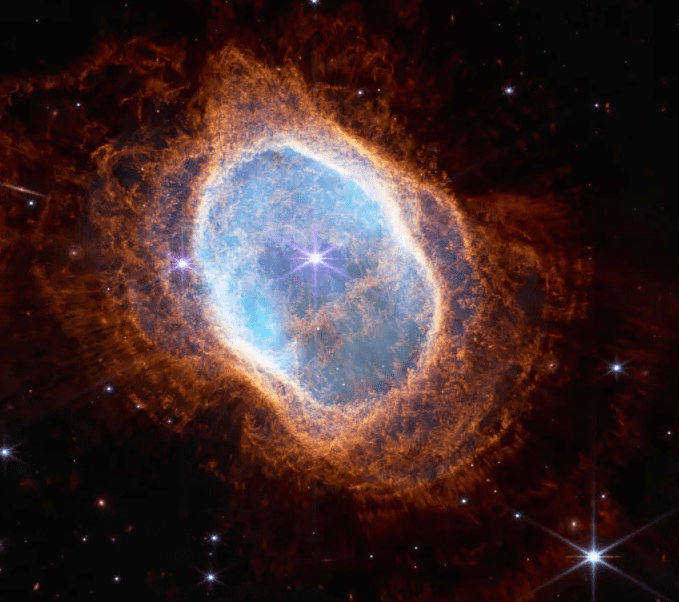
What are Nebulae?
Nebulae are vast clouds of interstellar gas and dust that exist in various regions of space. They come in different shapes, sizes, and compositions, and they play crucial roles in the formation and evolution of stars and galaxies. The word “nebula” itself is Latin for “cloud,” aptly describing these ethereal structures that adorn the night sky.
Types of Nebulae:
- Emission Nebulae:
– Emission nebulae are regions of ionized gas, primarily hydrogen, that emit light of various colors. These nebulae are often illuminated by nearby hot, young stars whose intense ultraviolet radiation ionizes the surrounding gas, causing it to glow.
– The Orion Nebula, located in the Orion constellation, is one of the most famous emission nebulae, showcasing a stunning array of colors and intricate structures. - Reflection Nebulae:
– Reflection nebulae are clouds of dust that scatter and reflect the light of nearby stars, creating beautiful blue hues. Unlike emission nebulae, they do not emit their own light but instead shine by reflecting starlight.
– The Pleiades, or Seven Sisters, is a well-known open star cluster surrounded by reflection nebulae, adding to its ethereal beauty. - Planetary Nebulae:
– Planetary nebulae are formed when a dying star sheds its outer layers, creating a shell of ionized gas. Despite their name, these nebulae have nothing to do with planets but instead represent the final stages of stellar evolution for low to intermediate-mass stars.
– The Ring Nebula (M57) is a classic example of a planetary nebula, displaying a ring-like structure around a central, fading star. - Dark Nebulae:
– Dark nebulae are dense clouds of dust and gas that obscure the light from background stars, creating striking silhouettes against the starry backdrop. They are often the birthplaces of new stars, as their gravitational collapse initiates the star formation process.
– The Horsehead Nebula, located in the Orion Molecular Cloud Complex, is a famous dark nebula known for its distinctive shape resembling a horse’s head against a background of glowing hydrogen gas.
Nebulae as Stellar Nurseries:
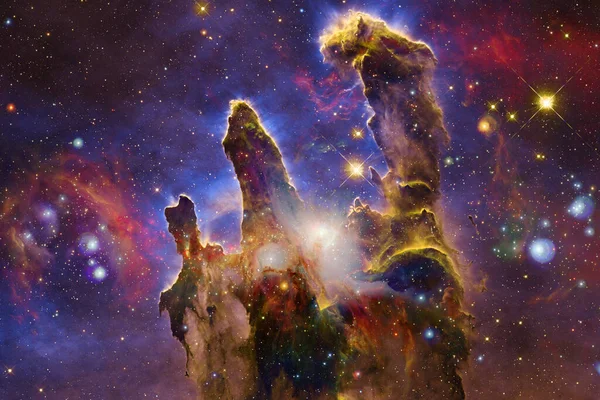
One of the most profound roles of nebulae is their function as stellar nurseries, where new stars are born from the gravitational collapse of dense regions within these vast clouds of gas and dust. The process begins with the gravitational attraction of molecular clouds, which can span hundreds of light-years in size. As these clouds contract under their own gravity, regions of higher density form, eventually leading to the birth of protostars.
The Birth of Stars:
Within the cores of dense molecular clouds, protostars begin to accrete mass from their surrounding environment, growing larger and hotter over time. As the temperature and pressure at the core of a protostar increase, nuclear fusion ignites, marking the birth of a new star. Surrounding gas and dust are blown away by the intense radiation and stellar winds, revealing the newborn star and often leaving behind a remnant nebula as a testament to its origin.
Nebulae in the Cosmic Cycle:
While nebulae are sites of stellar birth, they also play a crucial role in the recycling of matter throughout the universe. When massive stars reach the end of their lives and undergo supernova explosions, they release vast amounts of energy and heavy elements into their surrounding environment. These elements enrich the interstellar medium, seeding future generations of stars and planets with the building blocks of life.
Nebulae, with their breathtaking beauty and profound cosmic significance, offer us a glimpse into the dynamic and interconnected nature of the universe. From the majestic pillars of gas in the Eagle Nebula to the delicate tendrils of the Veil Nebula, each nebula tells a story of stellar birth, evolution, and the relentless march of time. As we continue to unravel the mysteries of the cosmos, nebulae serve as both inspiration and reminders of the wondrous processes that shape the universe we call home.
8,799 comments
Г¶ppettid apotek Svenska Pharma Svenska Pharma
Skip to details: נערות ליווי
svensk apotek: snabbast leverans apotek – Svenska Pharma
Svenska Pharma: apotek ̦ppet midsommarafton Рbilligt serum
mexico online farmacia: mexico drug store – online drugs order
https://mexicorate.icu/# order antibiotics from mexico
https://sansordonnancepharm.online/# Viagra Pfizer sans ordonnance
Svenska Pharma: Svenska Pharma – Svenska Pharma
Viagra vente libre pays: SildГ©nafil Teva 100 mg acheter – Viagra 100mg prix
В данной статье мы акцентируем внимание на важности поддержки в процессе выздоровления. Мы обсудим, как друзья, семья и профессионалы могут помочь тем, кто сталкивается с зависимостями. Читатели получат практические советы, как поддерживать близких на пути к новой жизни.
Получить профессиональную консультацию – вывода из запоя на дому в Иркутске