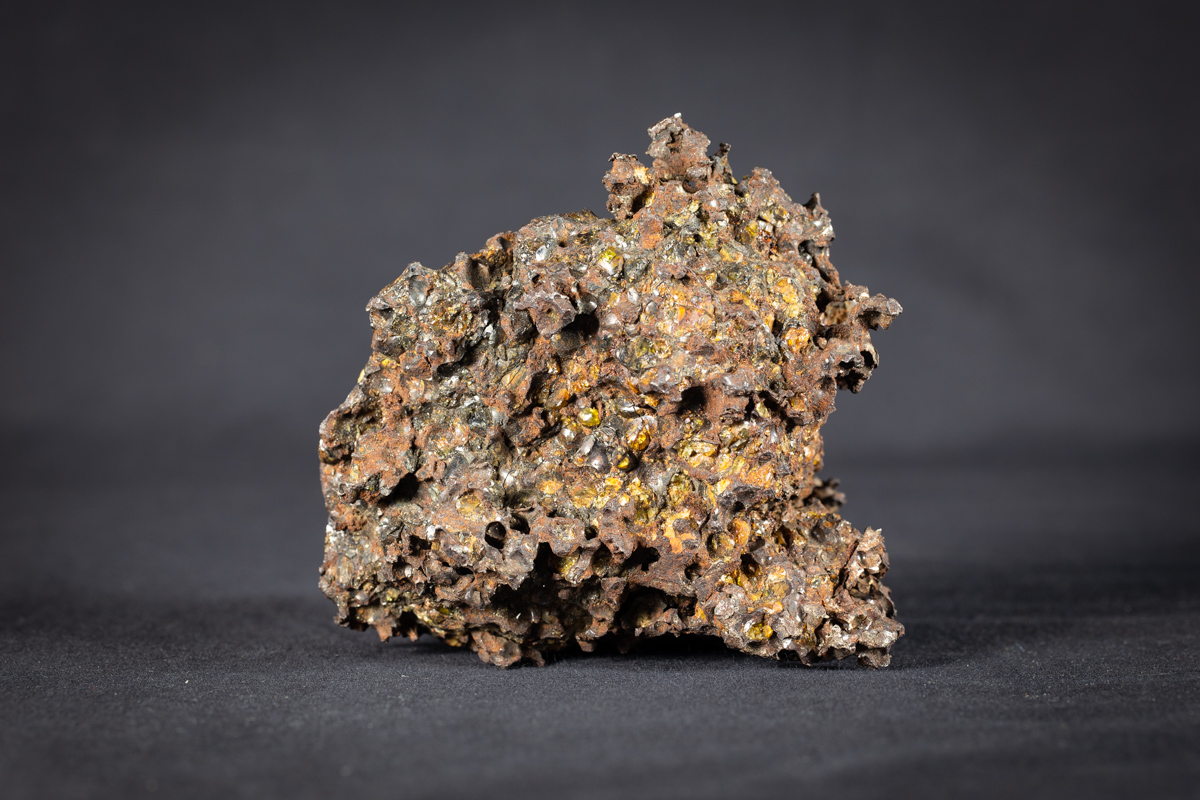
There are two methods for determining the absolute age of a rock, so-called radiochronology:
- The isochronous method
- The cosmogenic nuclide method
These two methods are based on natural nuclear disintegration of unstable nuclei present in the rock whose proportion of father nuclei (radioactive nuclei) and wire nuclei (the resulting cores more stable) is measured. The measurements are made by mass spectrometry (and more rarely by thermoluminescence or luminescence stipulated optically or by infrared).
As a reminder, the radioactivity of radionuclides is manifested in different ways:
- The alpha decay with a helion emission: for example 226Ra → 222Rn + 4He
- Beta decay (positive or negative): for example the decay β- of rubidium-87: 87RB → 87Rb → 87Sr + e– + anti ν
- Spontaneous fission (and induced fission) whose nuclear fragments may or can not be radioactive: for example 244Pu → 240U by alpha disintegration.
Nuclear disintegration obeys some natural rules such as the Radioactive Decay Act. This law stipulates that for a given father-son nuclear couple, the probability of disintegrating the core father per unit of time is a constant: it is the decay constant, symbolized by λ.
The disintegration of unstable nuclei and particle detectors obeying the quantum phenomena laws, we can not say with precision alien of nuclei will disintegrate at a given moment or will be measured by an instrument (eg a particle detector) . On the other hand, statistically one can accurately assess this proportion called the period (t) or half-life of an element. This is the necessary interval for 50% of the father radionuclides naturally disintegrate into wire elements. This period varies according to the elements between a few milliseconds and several tens of billions of years.

In the case of well-known carbon-14, the unstable father core is the 14C whose half-life is 5730 ± 40 years and the wire core is 12C stable. In other words, after approximately 5730 years, 50% of 14C isotopes will be transformed into 12C. 5730 years later, 50% of the remaining 14C isotopes will be transformed into 12c and so on.
We are talking about long-term or long life element when its half-life is similar or longer than the age of the solar system. In other cases, it is a short period of time or short life (even if it varies between a fraction of nanosecond and a few billion years).
In almost all minerals, father, son and other isotopes are present in variable proportions that depend on the composition of the original magma and the time it took to cool or crystallize (case of Quartz, feldspar, micas, etc.).
1,992 comments
Cheap Levitra online: Macksood Urology – Levitra 20 mg for sale
cheapest online ed meds Levitra 10 mg best price
888. https://888starzuz1.com/
Levitra tablet price Macksood Urology Urological Services Levitra tablet price
Dr. Macksood Urologist https://macksoodurology.shop online ed medicine
ED medications cialis for sale
Tadalafil Tablet Cialis over the counter Cheap Cialis
Buy generic Levitra online: Levitra 20 mg for sale – Levitra 20 mg for sale
Macksood Urology https://macksoodurology.com/ed-medications/levitra-vardenafil/ edmeds
buy ed medication online: Macksood Urology – buy erectile dysfunction medication